
Before becoming one of Paris’s most visited neighborhoods, Montmartre was a separate hilltop village on the northern edge of the city. Over the years, it became a gathering place for artists, writers, musicians, and free thinkers who were drawn to its affordable studios, village atmosphere, and creative spirit. Names such as Picasso, Renoir, Van Gogh, Toulouse-Lautrec, and Dalí all have connections to Montmartre, helping shape its reputation as the artistic heart of Paris.
- Map of the Best Things to Do in Montmartre
- 1. Sacré-Cœur Basilica
- 2. Place du Tertre
- 3. Saint-Pierre de Montmartre
- 4. Rue de l'Abreuvoir
- 5. La Maison Rose
- 6. Clos Montmartre Vineyard
- 7. Musée de Montmartre
- 8. Espace Dalí
- 9. Place Dalida & the Dalida Bust
- 10. Au Lapin Agile
- 11. Moulin de la Galette
- 12. Montmartre Cemetery
- 13. Le Mur des Je T’aime (The Wall of Love)
- 14. Bateau-Lavoir
- 15. Moulin Rouge
- Frequently Asked Questions About Montmartre
Today, Montmartre still feels noticeably different from many other parts of the city. While you’ll find famous landmarks and busy squares, you’ll also discover winding cobblestone streets, hidden staircases, historic cafés, quiet corners, and some of the best viewpoints in Paris. It’s one of the few neighborhoods where Paris can still feel like a small village.
Whether you’re visiting for the iconic Sacré-Cœur Basilica, the famous artists of Place du Tertre, or simply to wander through its charming streets, Montmartre offers a side of Paris that blends history, culture, and local character in a way few neighborhoods can match.
Montmartre at a Glance
- Location: 18th Arrondissement, Paris
- Most Famous Landmark: Sacré-Cœur Basilica
- Known For: Art, history, cafés, viewpoints, and bohemian culture
- Best For: First-time visitors, photographers, history lovers, and anyone wanting to experience a more traditional side of Paris
- Time Needed: Half a day to a full day
- Best Time to Visit: Early morning or late afternoon for fewer crowds and better light
Map of the Best Things to Do in Montmartre
To help you plan your visit, we’ve included a custom map featuring all of the attractions, landmarks, museums, viewpoints, cafés, and hidden gems mentioned in this guide.
Unlike a traditional walking route, this map is designed to help you explore Montmartre at your own pace. Many of the neighborhood’s highlights are located within a relatively compact area, making it easy to mix and match attractions based on your interests.
How to Use This Map: This map is fully interactive, allowing you to zoom in and out, move around freely, and click on the icons to view additional details. To open a larger version of the map, click the expand icon in the top-right corner. You can also access different layers and locations by clicking the menu icon in the top-left corner. If you’d like to save the map for your trip, click the star icon next to the map title. The map will then be available in Google Maps on both desktop and mobile – simply go to Saved → Maps to access it whenever you need it.
1. Sacré-Cœur Basilica
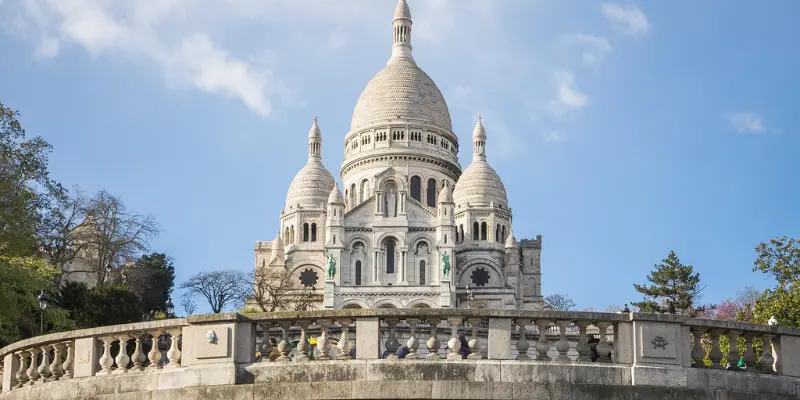
Perched at the highest point in Paris, Sacré-Cœur Basilica is the landmark that defines Montmartre. Its distinctive white domes can be seen from across the city, and the hilltop location provides one of the most spectacular panoramic views in Paris. For many visitors, this is the first stop in the neighborhood—and it’s easy to see why.
Built between 1875 and 1914, the basilica stands out from many of Paris’s older Gothic churches thanks to its Romano-Byzantine architecture. Inside, you’ll find an impressive mosaic above the altar, while outside, the wide steps and terraces offer sweeping views over the Paris skyline. Entry to the basilica itself is free, though visitors can pay to access the dome for an even higher viewpoint.
The atmosphere around Sacré-Cœur is just as memorable as the monument itself. Street musicians, artists, and performers often gather on the steps, creating the lively energy that has become part of the Montmartre experience. If you’d like to learn more about the neighborhood’s history, artists, and hidden corners, a guided Montmartre walking tour is a great way to explore beyond the main sights.
It’s also one of the most photographed landmarks in the city and regularly appears on lists of the best photo spots in Paris. If you’re following our 4-day Paris itinerary, you’ll find Sacré-Cœur featured as one of the highlights of Day 3.
2. Place du Tertre
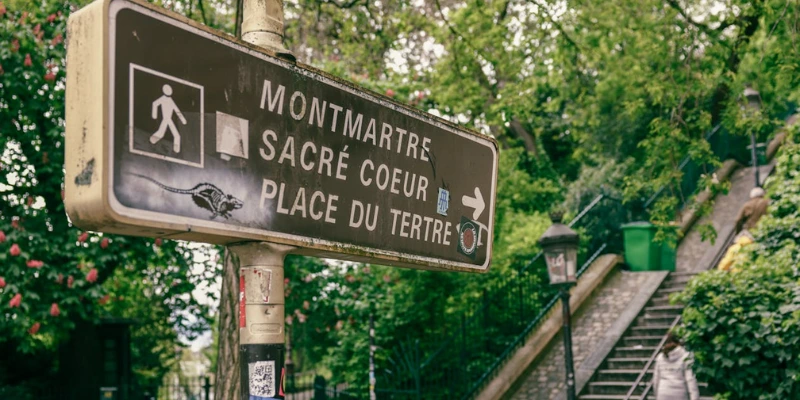
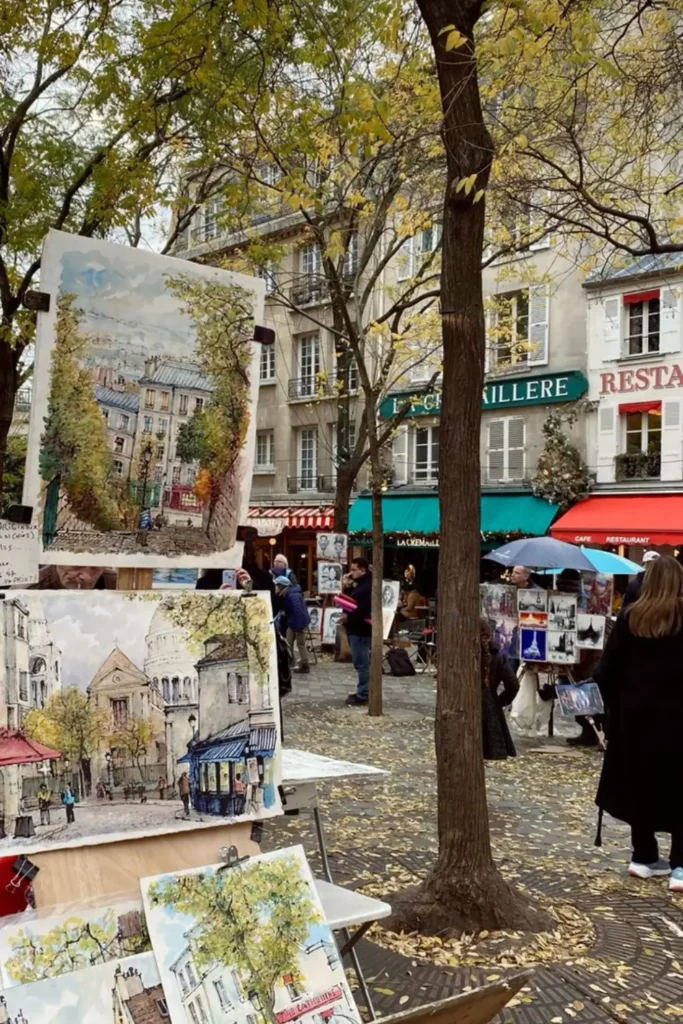
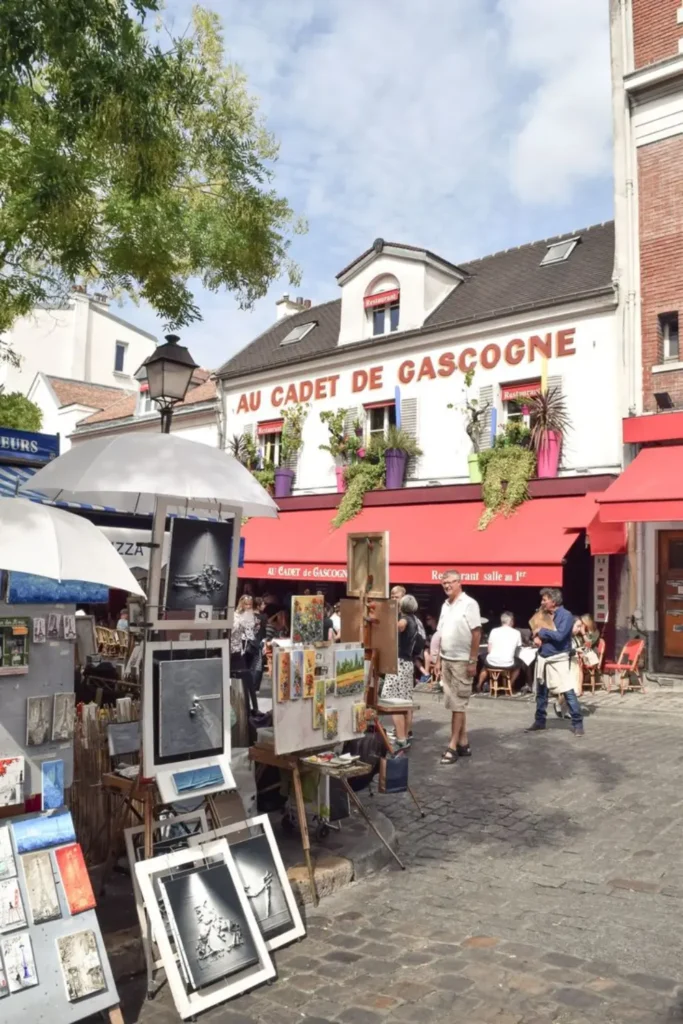
Just a short walk from Sacré-Cœur, Place du Tertre is the historic heart of Montmartre and one of the most recognizable squares in Paris. Long before tourists arrived, this was a gathering place for artists who came to the neighborhood seeking affordable studios and creative inspiration. Today, that artistic tradition is still very much alive.
The square is filled with painters, portrait artists, and illustrators working outdoors, giving visitors a glimpse into the creative spirit that made Montmartre famous. While the area can be busy throughout the day, it retains a unique atmosphere that feels different from anywhere else in Paris. It’s easy to imagine artists like Picasso, Renoir, and Modigliani walking through these same streets during Montmartre’s bohemian heyday.
Surrounding the square, you’ll find cafés, restaurants, and narrow cobblestone lanes that are perfect for wandering. Even if you’re not interested in purchasing artwork, spending some time watching the artists at work is part of the experience.
From here, it’s also easy to continue exploring some of the neighborhood’s most famous streets, including Rue de l’Abreuvoir and Rue des Saules, which are among the most charming corners featured in our guide to the best hidden gems in Paris.
3. Saint-Pierre de Montmartre
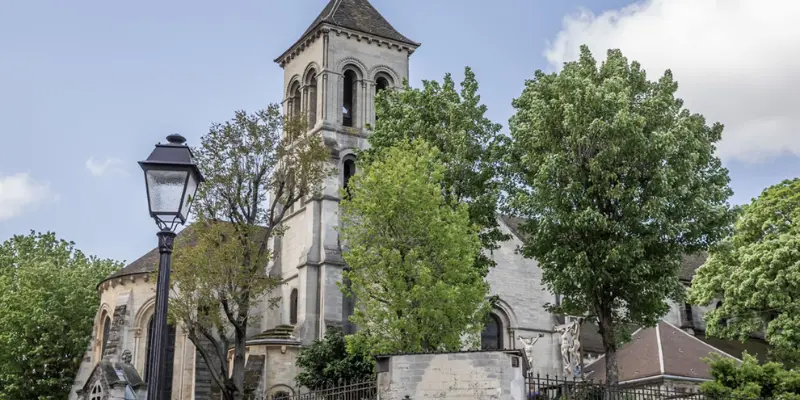
Most visitors head straight for Sacré-Cœur and overlook the historic church sitting right beside it. Saint-Pierre de Montmartre is one of the oldest churches in Paris, with parts of the building dating back to the 12th century. Its history stretches back even further, as the site is believed to have been an important religious location long before the church was constructed.
Compared to the crowds surrounding Sacré-Cœur, Saint-Pierre feels remarkably peaceful. The simple interior, stained-glass windows, and centuries-old stonework offer a quieter glimpse into Montmartre’s past. It’s also one of the few places in the neighborhood where you can escape the busy tourist atmosphere for a moment.
The church played an important role in the development of Montmartre, back when the area was still a village outside Paris. Visiting both Saint-Pierre and Sacré-Cœur side by side provides an interesting contrast between two very different periods of French religious architecture.
Because it sits directly next to Place du Tertre and Sacré-Cœur, Saint-Pierre is easy to visit while exploring the neighborhood. Many travelers walk past without realizing its significance, making it one of Montmartre’s most underrated historic landmarks.
4. Rue de l'Abreuvoir
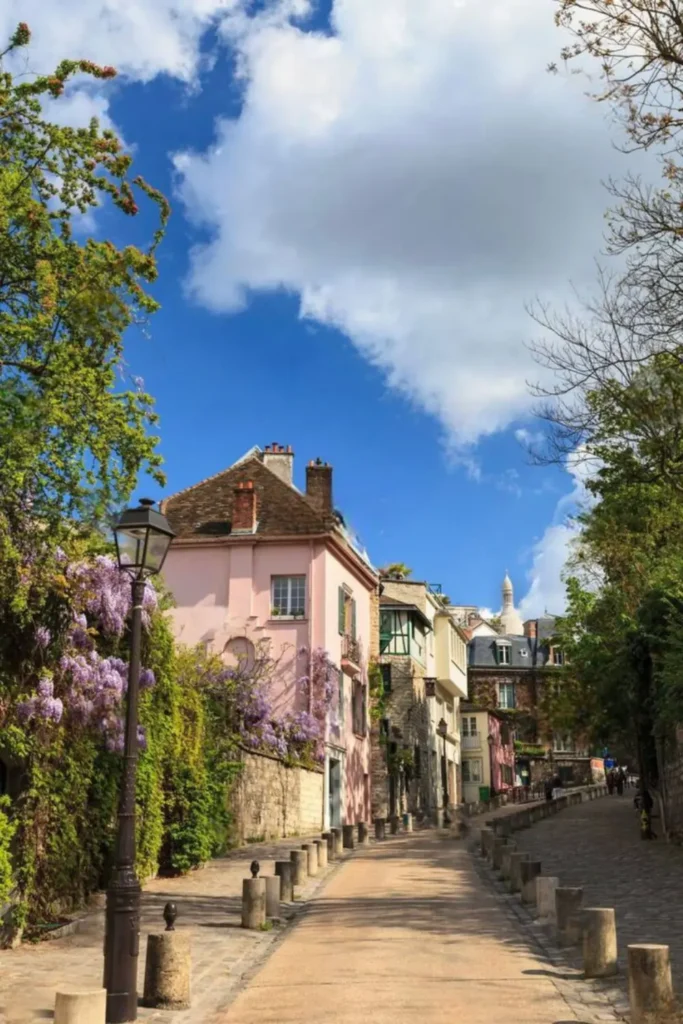
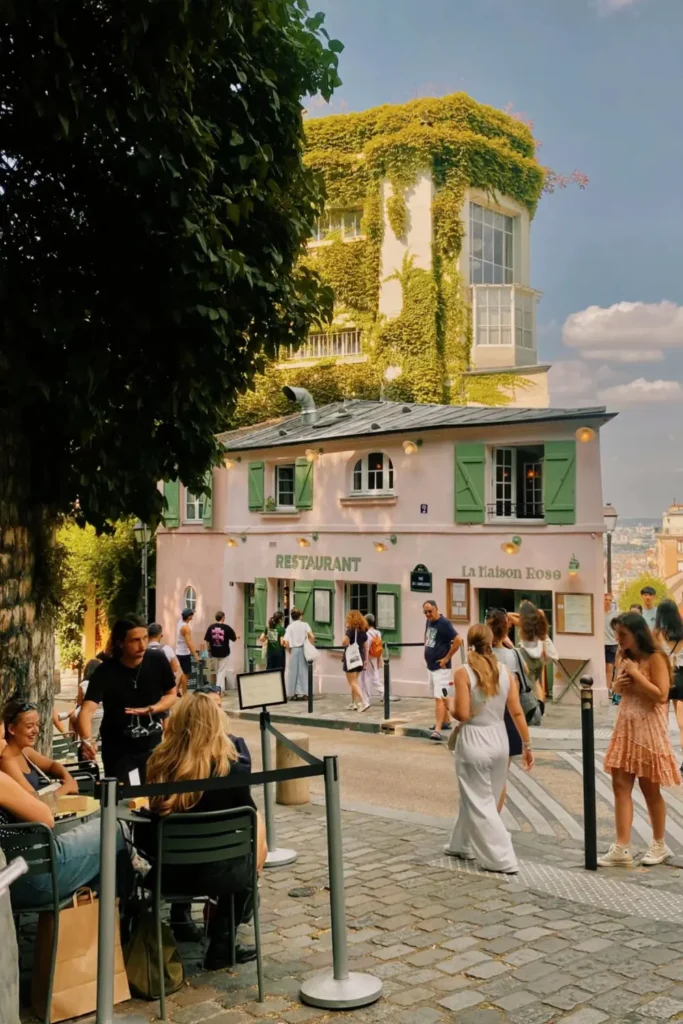
After exploring the busy squares around Sacré-Cœur and Place du Tertre, Rue de l’Abreuvoir offers a completely different side of Montmartre. Often considered one of the most beautiful streets in the neighborhood, it feels surprisingly quiet despite being just a short walk from some of Paris’s most visited attractions.
The street curves gently downhill past historic houses, ivy-covered walls, and charming corners that have changed little over the decades. Its village-like atmosphere is part of what makes Montmartre so special. Long before the area became one of Paris’s most popular neighborhoods, artists were drawn here by its slower pace, affordable studios, and distinct character.
Several of Montmartre’s most famous landmarks can be found along or near Rue de l’Abreuvoir, including La Maison Rose and the Clos Montmartre vineyard. Even so, the street itself is the attraction. It’s the kind of place where wandering without a plan often becomes the highlight of a visit.
For travelers looking beyond the city’s major landmarks, Rue de l’Abreuvoir is a perfect example of the quieter, more authentic side of Paris that still survives in parts of Montmartre. It’s also one of the standout locations featured in many guides to the most beautiful streets in Paris.
5. La Maison Rose
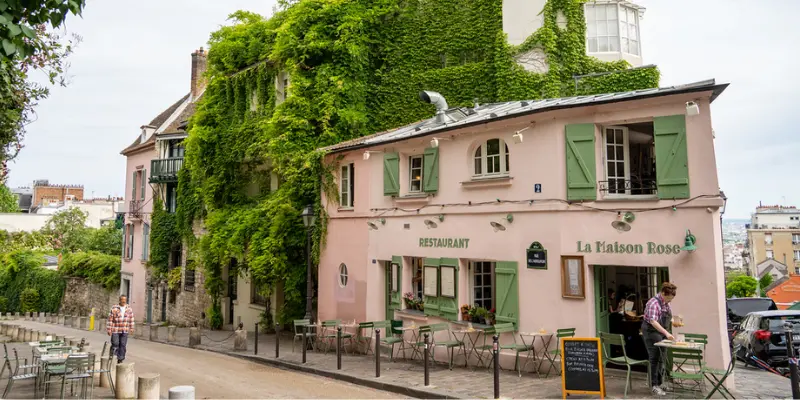
Few places in Montmartre are as recognizable as La Maison Rose. With its soft pink facade, green shutters, and picturesque location at the corner of Rue de l’Abreuvoir, it has become one of the neighborhood’s most photographed landmarks and a symbol of Montmartre’s artistic charm.
The building dates back to the early 20th century and gained fame after becoming a favorite subject for local artists. Over the years, it has appeared in countless paintings, photographs, travel guides, and social media posts, helping cement its status as one of the most iconic spots in the area. Despite its popularity, it still manages to retain much of the character that made it famous in the first place.
Today, La Maison Rose operates as a restaurant, making it more than just a photo stop. Visitors can enjoy a meal or coffee while soaking up the atmosphere of one of Montmartre’s most charming corners. If you’re hoping to dine here, making a reservation in advance is often a good idea, especially during the busy travel season.
Its location also makes it an excellent stop while exploring nearby attractions such as the Clos Montmartre vineyard and Rue des Saules. Together, these streets showcase the village-like character that continues to distinguish Montmartre from the rest of Paris.
If you’re looking for more places like this, our guide to the best cafés in Montmartre highlights several other historic spots worth visiting throughout the neighborhood.
6. Clos Montmartre Vineyard
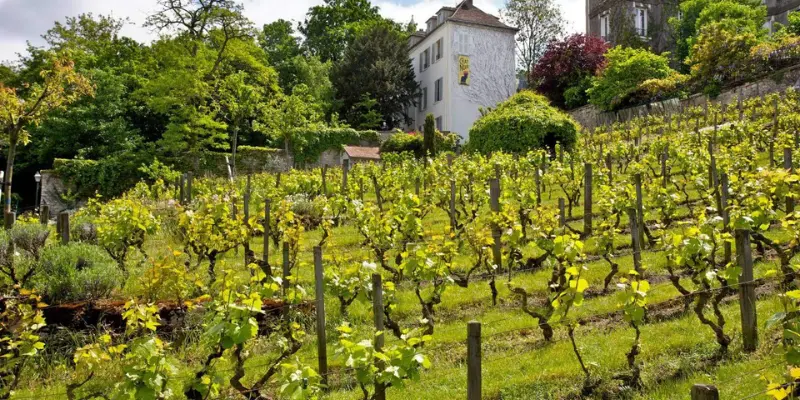
One of the most surprising sights in Paris is hidden among the streets of Montmartre. Clos Montmartre is the city’s last remaining vineyard, a reminder of a time when the hill was covered with vines and winemaking played an important role in local life.
The vineyard dates back to the 1930s in its current form, although Montmartre’s wine-growing history stretches back centuries. Today, around 1,500 vines grow on the small hillside plot, producing a limited number of bottles each year. While the vineyard is not generally open for casual visits, it can be admired from the surrounding streets and viewpoints.
What makes Clos Montmartre special isn’t just the wine. It’s the fact that it feels completely unexpected. Surrounded by historic buildings and tucked away behind fences and greenery, it adds to the village atmosphere that makes Montmartre so different from the rest of Paris.
The vineyard also hosts the annual Fête des Vendanges de Montmartre, a popular harvest festival that brings together wine tastings, local food, live music, and cultural events. If you’re visiting Paris in October, it’s one of the most unique celebrations in the city and offers a different perspective on Montmartre beyond its famous landmarks.
Combined with nearby stops such as La Maison Rose, Rue des Saules, and Au Lapin Agile, the vineyard forms one of the most charming corners of the neighborhood and a reminder that Montmartre’s history extends far beyond its artistic legacy.
7. Musée de Montmartre
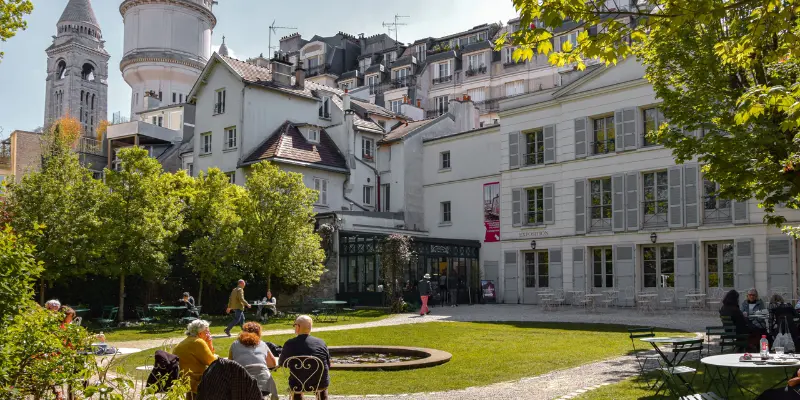
If you only visit one museum in Montmartre, make it Musée de Montmartre. Housed in one of the neighborhood’s oldest buildings, the museum tells the story of Montmartre before it became one of Paris’s most famous districts and offers fascinating insight into the artists, cabarets, and creative communities that shaped its identity.
The museum’s collection includes paintings, posters, photographs, and historical objects connected to figures such as Renoir, Toulouse-Lautrec, Suzanne Valadon, and other artists who lived and worked in Montmartre. Rather than focusing on a single artist, it helps visitors understand how the neighborhood evolved into the artistic center of Paris during the late 19th and early 20th centuries.
One of the highlights is the museum’s beautiful gardens, which are inspired by Renoir’s paintings and offer a peaceful escape from the crowds found elsewhere in Montmartre. With views over the vineyard and surrounding streets, it’s one of the most relaxing spots in the neighborhood and a place many visitors remember long after their trip.
For anyone interested in the history and culture behind Montmartre’s famous streets, the museum adds valuable context to many of the landmarks featured throughout this guide. Visitors can purchase Musée de Montmartre tickets in advance, which is often worthwhile during the busiest months of the year.
8. Espace Dalí
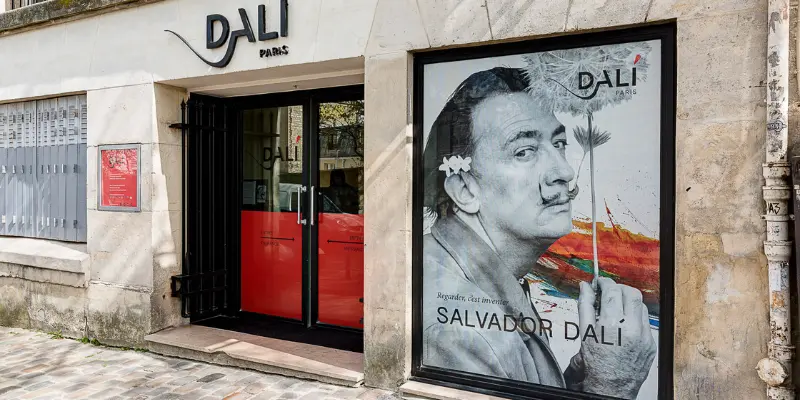
Tucked away just a few steps from Place du Tertre, Espace Dalí is one of those places that many people walk past without realizing what’s inside. If you’re expecting another traditional Paris museum, you’ll be surprised. The collection is dedicated entirely to Salvador Dalí and showcases a side of the artist that many people have never seen before.
Instead of focusing on his famous paintings, the museum highlights Dalí’s sculptures, engravings, and surreal creations. As you move through the exhibits, you’ll find melting clocks, strange figures, and imaginative works that feel like they’ve been pulled straight from one of his dreams. It’s quirky, a little unusual, and a nice change from the larger museums you’ll find elsewhere in Paris.
Another thing that makes Espace Dalí appealing is that it doesn’t require a huge time commitment. You can comfortably explore the museum in about an hour, making it an easy stop while wandering through Montmartre. If you’re already visiting Place du Tertre or the Musée de Montmartre, it’s well worth adding to your route.
If you’d like to include it in your visit, Espace Dalí tickets can be purchased in advance, which is particularly useful during the busier months when Montmartre sees the highest number of visitors.
9. Place Dalida & the Dalida Bust
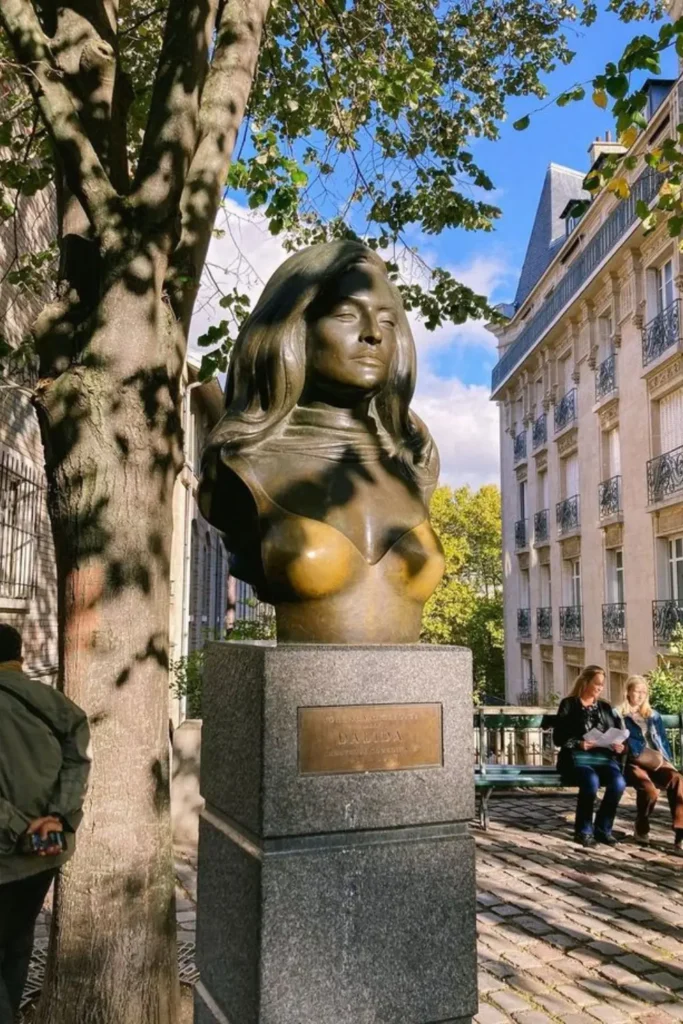
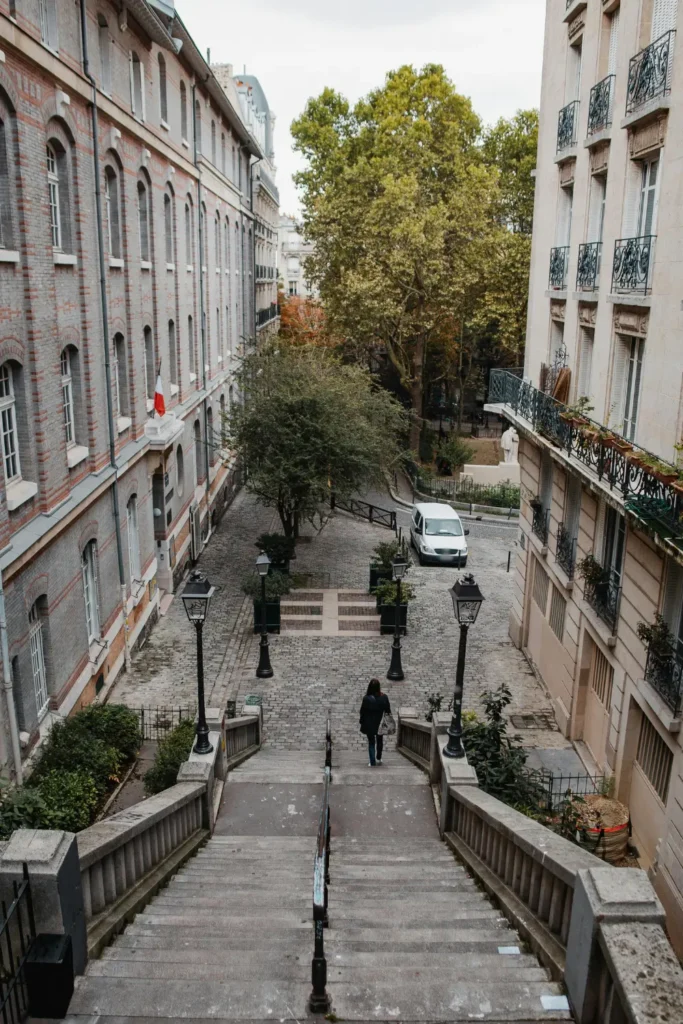
Not far from Rue de l’Abreuvoir, Place Dalida is one of Montmartre’s quieter corners and a place many visitors only discover while wandering through the neighborhood’s backstreets. The small square is dedicated to Dalida, one of France’s most famous singers, who lived in Montmartre for many years and remains an important part of its cultural history.
At the center stands a bronze bust of Dalida that has become a popular stop for both fans and curious visitors. According to local tradition, touching the statue brings good luck, which explains why parts of it appear noticeably more polished than the rest.
What makes Place Dalida special isn’t necessarily the monument itself, but the setting. Surrounded by trees, historic buildings, and quiet residential streets, it feels completely different from the busy atmosphere around Sacré-Cœur and Place du Tertre. It’s the kind of place that reminds you Montmartre is still a real neighborhood, not just a collection of tourist attractions.
If you’re already exploring Rue de l’Abreuvoir, La Maison Rose, or the nearby vineyard, it’s worth taking a few extra minutes to stop here and enjoy one of the most peaceful spots on the hill.
10. Au Lapin Agile
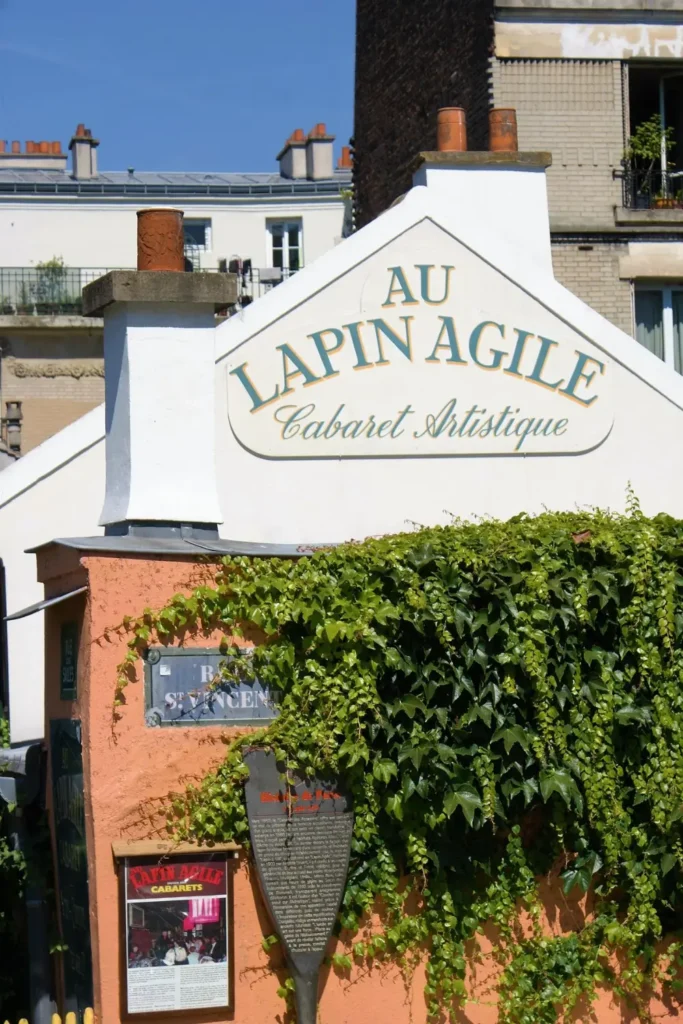
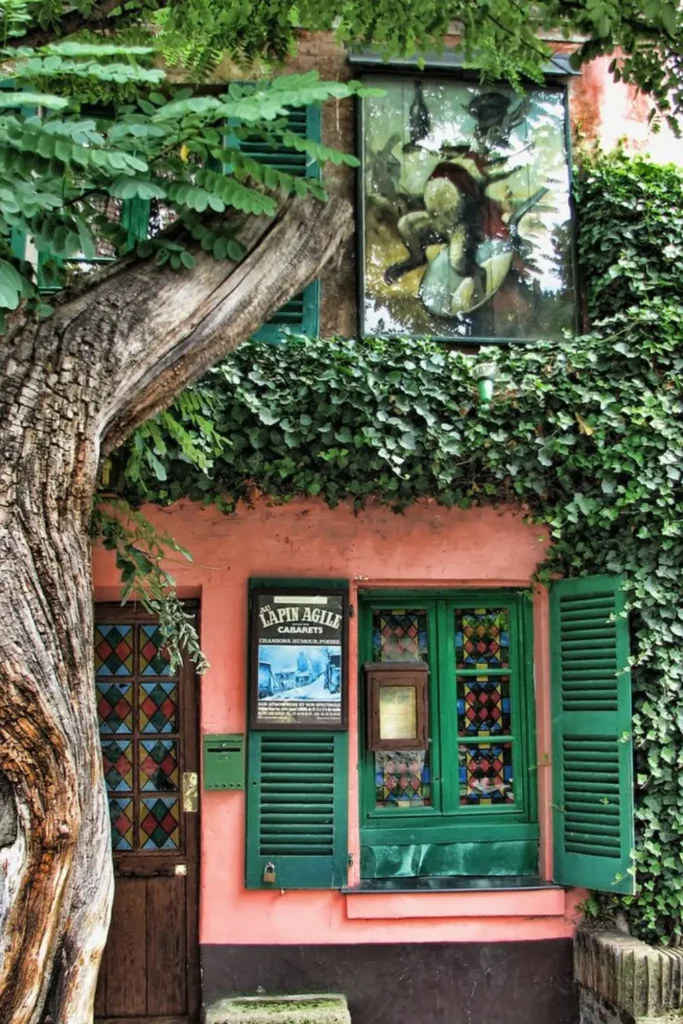
Long before Montmartre became one of Paris’s most visited neighborhoods, artists, poets, musicians, and writers gathered at Au Lapin Agile. Open since the 19th century, this historic cabaret is one of the last remaining reminders of Montmartre’s bohemian past and has welcomed famous names such as Picasso, Modigliani, Apollinaire, and Toulouse-Lautrec.
From the outside, the building looks surprisingly modest. In fact, it’s easy to walk past without realizing you’re looking at one of the most legendary venues in Parisian artistic history. That understated appearance is part of its charm. Unlike the larger entertainment venues in Paris, Au Lapin Agile has remained intimate and traditional.
The cabaret still hosts live performances today, focusing on French songs, storytelling, and piano music rather than elaborate stage productions. The experience feels much closer to stepping back in time than attending a modern show. If you’re looking for something different from the typical Paris nightlife scene, spending an evening here can be a memorable experience.
Because seating is limited, it’s often worth reserving Au Lapin Agile show tickets in advance, especially during the busiest travel months. Even if you don’t go inside, stopping by the building while exploring the nearby vineyard and Rue des Saules helps bring Montmartre’s artistic history to life.
11. Moulin de la Galette
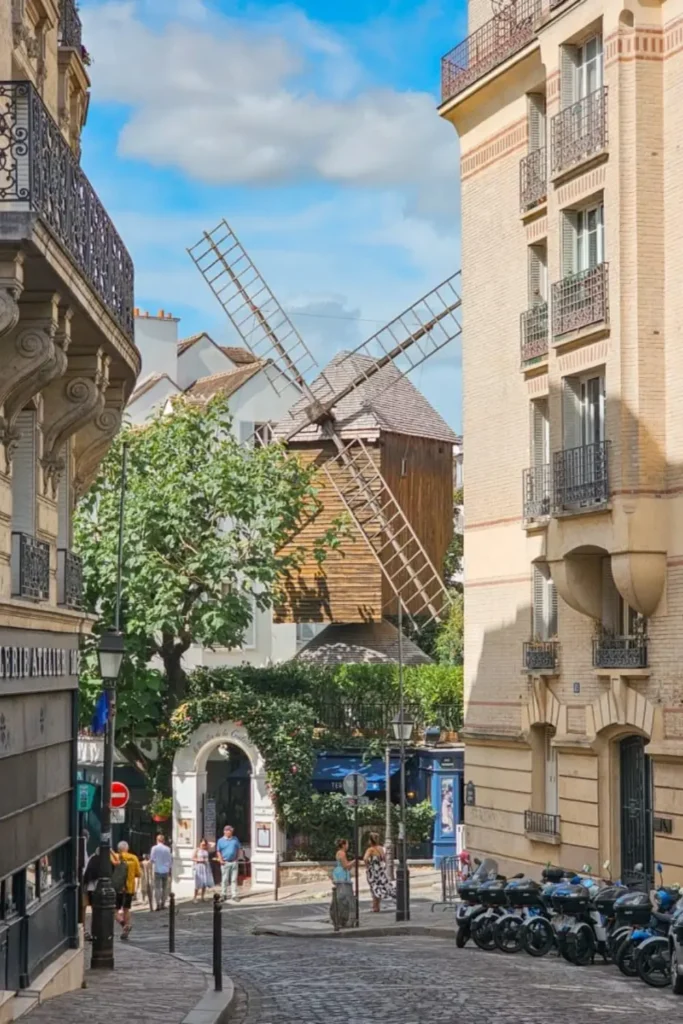
One of the most recognizable landmarks in Montmartre isn’t a church, museum, or café. It’s a windmill. Moulin de la Galette is one of the few surviving windmills on the hill and serves as a reminder that this part of Paris once looked very different from the city we know today.
The windmill became famous through Pierre-Auguste Renoir’s painting Bal du moulin de la Galette, one of the most celebrated works of the Impressionist movement. The painting captured the lively atmosphere of the area and helped turn the Moulin de la Galette into one of Montmartre’s most enduring symbols.
Today, the historic windmill sits above Le Moulin de la Galette, a restaurant that continues the site’s long connection to food and social gatherings. Even if you’re not planning to stop for a meal, it’s worth taking a moment to appreciate how much history is packed into this small corner of Montmartre.
Unlike some of the area’s headline attractions, many people stumble upon Moulin de la Galette while exploring the surrounding streets. That’s part of its appeal. It’s a landmark that feels woven into the neighborhood rather than designed specifically for tourists, making it one of the most interesting historic sites to seek out while wandering through Montmartre.
12. Montmartre Cemetery
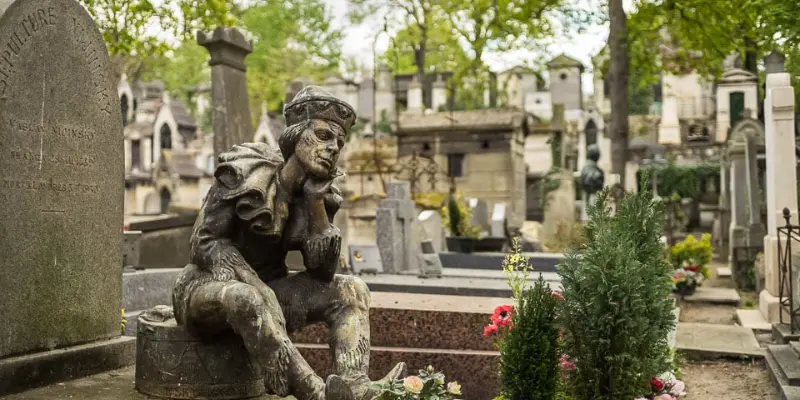
Opened in 1825, Montmartre Cemetery is one of Paris’s largest and most historic cemeteries. Hidden below street level near the foot of the hill, it covers more than 10 hectares and serves as the final resting place of artists, writers, musicians, filmmakers, and other influential figures connected to French culture.
Wide pathways lead past elaborate tombs, sculptures, chapels, and family mausoleums, many of which are remarkable examples of 19th-century funerary architecture. Mature trees and carefully landscaped grounds add to the atmosphere, turning the cemetery into one of the most visually interesting historic sites in Montmartre.
Among the most notable graves are those of Edgar Degas, Alexandre Dumas, François Truffaut, and Dalida. Their presence reflects the important role Montmartre has played in France’s artistic and cultural history for generations.Among the most notable graves are those of Edgar Degas, Alexandre Dumas, François Truffaut, and Dalida. Their presence adds another layer to Montmartre’s story, connecting the neighborhood not only to its artistic past but also to generations of French cultural icons.
One of the cemetery’s most distinctive features is the bridge that crosses directly above part of the grounds. The structure has become one of Montmartre Cemetery’s defining landmarks and creates a scene unlike any other cemetery in Paris.
13. Le Mur des Je T’aime (The Wall of Love)
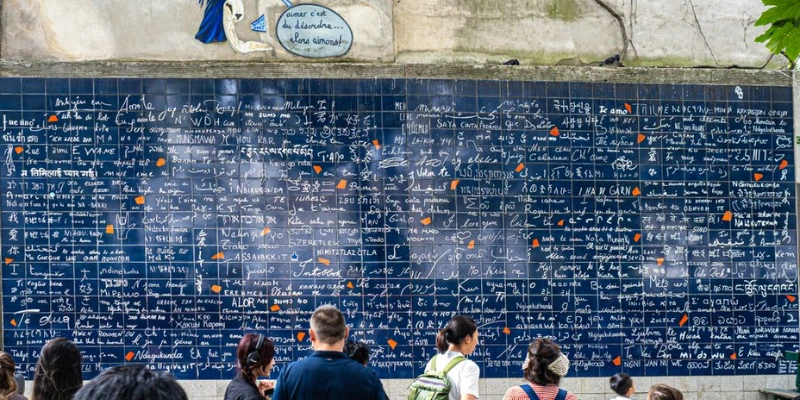
Le Mur des Je T’aime is a public art installation dedicated to a simple phrase: “I love you.” Located in Square Jehan Rictus near the Abbesses metro station, the wall features more than 300 declarations of love written in over 250 languages and dialects from around the world.
Created by artists Frédéric Baron and Claire Kito, the project was designed to symbolize peace, connection, and understanding between cultures. The blue-tiled wall is covered with handwritten messages, while the red shapes scattered across the artwork represent pieces of a broken heart coming together.
People often spend time searching for their own language among the hundreds displayed on the wall. What looks like a simple photo stop at first quickly becomes more interesting as you begin noticing just how many countries and cultures are represented.
The installation sits in the Abbesses area, a lively part of Montmartre filled with cafés, bakeries, and local shops. It’s an easy place to pause for a few minutes while exploring the neighborhood and one of the more unusual landmarks you’ll come across during a walk through Montmartre.
14. Bateau-Lavoir
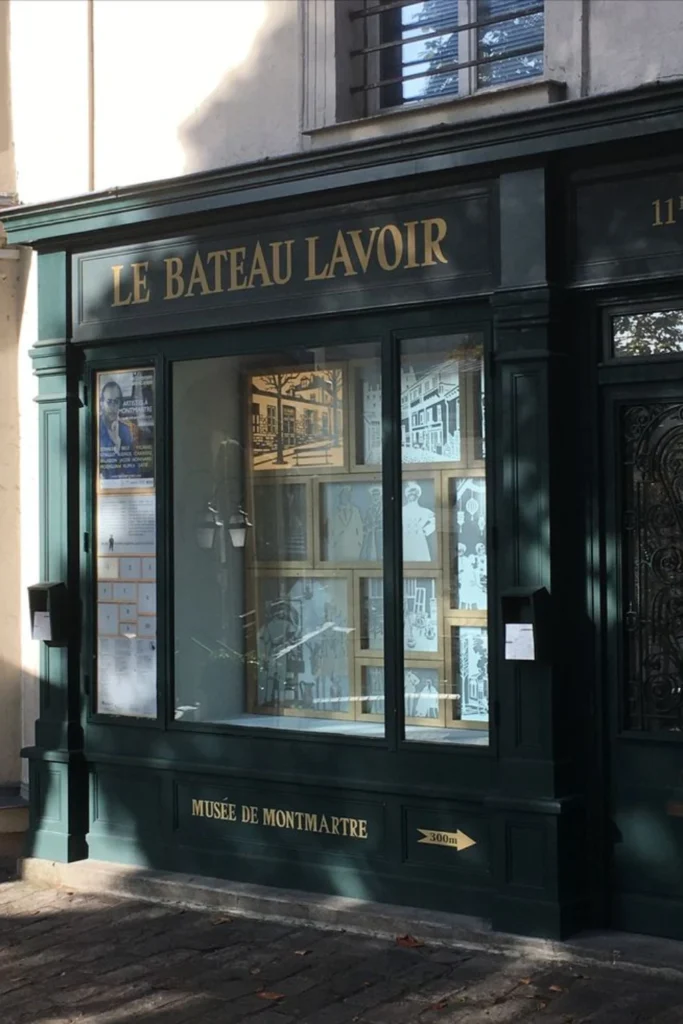
At first glance, Bateau-Lavoir doesn’t look particularly remarkable. The modest building on Place Émile-Goudeau lacks the grandeur of Paris’s famous museums and monuments, yet it played a pivotal role in the history of modern art.
In the early 1900s, the building served as a collection of inexpensive artist studios and became a gathering place for some of the biggest creative names of the era. Pablo Picasso lived and worked here, and it was within these walls that he painted Les Demoiselles d’Avignon, a work widely considered one of the foundations of modern art. Other artists, writers, and poets also passed through Bateau-Lavoir, helping establish Montmartre as the center of Paris’s avant-garde scene.Created by artists Frédéric Baron and Claire Kito, the project was designed to symbolize peace, connection, and understanding between cultures. The blue-tiled wall is covered with handwritten messages, while the red shapes scattered across the artwork represent pieces of a broken heart coming together.
The original building was damaged by fire in the 1970s and later reconstructed, but the site remains an important stop for anyone interested in the neighborhood’s artistic heritage. Standing outside, it’s fascinating to imagine the conversations, ideas, and artistic breakthroughs that once took place here.
Bateau-Lavoir also highlights something that made Montmartre unique during this period. Artists weren’t drawn here by famous landmarks or luxury living. They came because rents were cheap, studios were available, and creative communities were forming around every corner. Much of the neighborhood’s identity today can be traced back to places like this.
15. Moulin Rouge
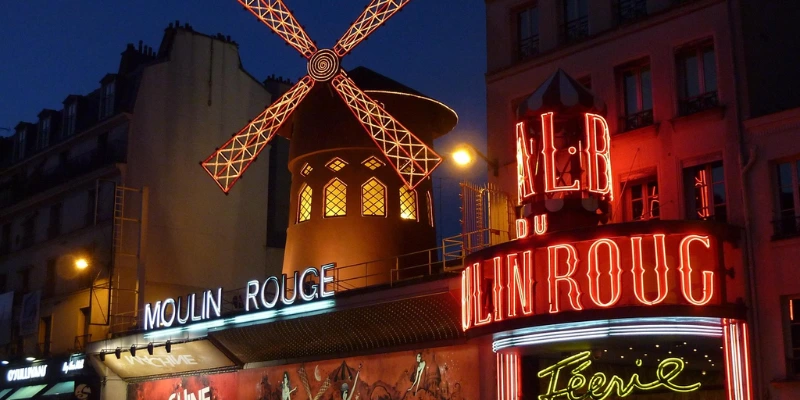
Few landmarks are as closely associated with Paris nightlife as the Moulin Rouge. Instantly recognizable by its bright red windmill, the cabaret has been entertaining audiences since 1889 and remains a symbol of the city’s Belle Époque era.
The venue became famous for its extravagant performances, elaborate costumes, and the can-can dance, which helped turn the Moulin Rouge into one of the most talked-about entertainment venues in Europe. Over the decades, it has welcomed everyone from artists and writers to royalty, celebrities, and travelers from around the world.
Even if you don’t attend a show, the building itself is worth seeing. Standing at the foot of Montmartre on Boulevard de Clichy, the illuminated facade has become one of Paris’s most recognizable sights after dark. It’s also a reminder of the neighborhood’s long connection to music, performance, and nightlife.
For a deeper look inside, Moulin Rouge show tickets include the famous cabaret performance and are often booked weeks in advance, particularly during the busiest travel seasons. Whether you watch the show or simply stop for a photo, the Moulin Rouge remains one of the defining landmarks of Montmartre and a fitting final stop on any exploration of the neighborhood.
Frequently Asked Questions About Montmartre
What is Montmartre famous for?
Montmartre is famous for its artistic history, hilltop views, and bohemian atmosphere. The neighborhood was once home to artists such as Picasso, Renoir, and Toulouse-Lautrec and is now known for landmarks like Sacré-Cœur Basilica, Place du Tertre, and the Moulin Rouge.
Is Montmartre worth visiting?
Montmartre combines some of Paris’s most famous landmarks with quieter streets, historic cafés, museums, and unique attractions. It’s one of the few neighborhoods where you can visit a basilica, a vineyard, an artists’ square, and a world-famous cabaret all within a relatively small area.
What is the most famous attraction in Montmartre?
Sacré-Cœur Basilica is the most famous attraction in Montmartre. Sitting at the highest point in Paris, it offers panoramic views across the city and serves as the neighborhood’s most recognizable landmark.
Can you visit Montmartre in one day?
Yes. Many visitors explore the main attractions in half a day, but a full day allows more time for museums, cafés, quieter streets, and some of the lesser-known spots that make the neighborhood special.
Is Montmartre a good area to stay in Paris?
Montmartre is a popular place to stay thanks to its atmosphere, local character, and large selection of cafés, restaurants, and boutique hotels. Its hilltop location means it’s slightly farther from some major attractions, but several metro stations make it easy to reach the rest of Paris.